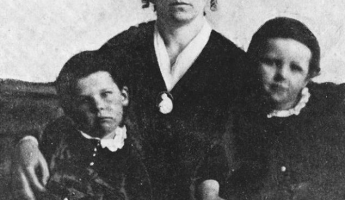
In 1949, she was 23 years old, and her prospects were iffy. Her lawyer father had encouraged her to practice law, but her heart just wasn’t in it. It had been difficult to break the news to her family—they might be willing to pay for law school, but she wanted to become a writer instead. Let Alice stay home in Alabama and practice law—Nelle Harper Lee was on her way to New York City.
Nelle moved into a cold-water flat and began a string of low-paying jobs. She worked at a publishing company, a bookstore, the reservations desk at an airline. She also worked on stories, as many as she could muster. In 1956, her friends encouraged her to find an agent, but her crippling shyness kicked in. “I walked around the block three times before I could muster the courage to go in,” she recalled in an interview ten years later. “Finally I rushed in, left the manuscripts with the secretary, and left. I prayed for quick death, and forgot about it.”
It wasn’t a total bust—the agent referred her to her husband, who represented novels. He liked her stories, but suggested she try working on a book instead. That must have seemed like a stretch for a young woman who had to fight for every moment she devoted to her fiction.
But then Christmas came, and with it a white envelope and a note. Nelle was visiting her friends Michael and Joy Brown when they stunned her with a gift unlike any she had ever received. Charles J. Shields describes the moment in his book Mockingbird:
Poking out from the branches was a white envelope labeled “Nelle.” She opened it. The note inside read, “You have one year off from your job to write whatever you please. Merry Christmas.”
“What does this mean?” she asked.
“What it says.”
Several seconds passed before she found her voice. “It’s a fantastic gamble. It’s such a great risk.”
Michael smiled. “No, honey. It’s not a risk. It’s a sure thing.”
Buoyed by her friends’ belief in her and uplifted by the cash in her pocket, Nelle started a novel called Go Set a Watchman. She began to drop it off at her agent’s office piece by piece. Over the months and year that followed, first working with Maurice Crain and then with editors at the publishing house J. B. Lippincott, Nelle pieced together a book about the childhood experiences of one Jean Louise Finch.
But Nelle’s editors felt that her book was fragmented. Jean Louise’s story was intriguing, but too episodic, they said. They encouraged her to delve deeper into the story of the girl Nelle nicknamed “Scout.” As the book morphed from one about an adult woman to one about a girl’s encounter with racial intolerance, Nelle was making her own transformation. Go Set a Watchman turned into Atticus which turned into To Kill a Mockingbird, and Nelle settled on her middle name as her literary moniker.
What followed, of course, is history: To Kill a Mockingbird won a Pulitzer Prize, has sold over 30 million copies, and has become an enduring classic about childhood, courage, and injustice. Readers have long wondered why the famously reclusive Nelle never published another book. And now, news that Lee’s “recovered” novel Go Set a Watchman will be published in July 2015 has shaken the book world to its core. Will the book, which features familiar faces Mockingbird twenty years after the events outlined in Lee’s debut, live up to the legend?
Some fans are confused about the timing of the book and wonder whether Lee was pressured into the decision. Lee was famously involved in a 2013 lawsuit alleging that her agent committed elder abuse, taking advantage of her age and withholding royalties from her famous novel. She fought tooth and nail against the publication of The Mockingbird Next Door, a book written by a journalist who befriended Lee, then wrote a memoir about her without her approval. The recent death of Lee’s beloved sister Alice, the bulldog lawyer who helped guard her privacy, has been cited by some as a possible reason for the timing of today’s announcement. And Lee’s physical condition (she is “profoundly deaf,” nearly completely blind, and wheelchair-bound) is raising questions about who is making her decisions—and why.
Nelle will doubtless remain silent about the reasons for her change of heart, but that won’t stop the book world from speculating. As for the author herself, she’s modest about the book that will doubtless shake the literary world this summer. “In the mid-1950s, I completed a novel called Go Set a Watchman. It features the character known as Scout as an adult woman,” she explained in a release, “…I thought it a pretty decent effort.”