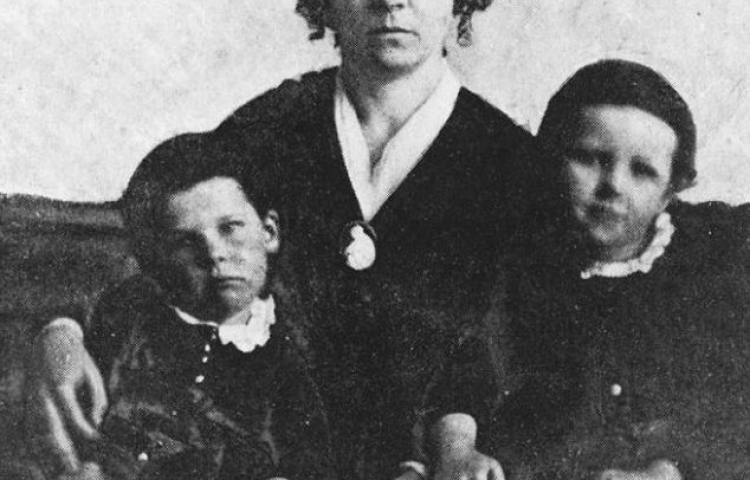
Today, Elizabeth Cady Stanton is seen as one of the giants of women’s suffrage. But in 1840, she was a young woman on the verge of marriage—a woman who had no idea that a quibble about seating was about to thrust her headfirst into the issue of women’s rights.
She had been aware of society’s unequal treatment of women since she was a child. As an eleven-year-old, she watched her only brother die, then stood by as her inconsolable father declared “Oh, my daughter, I wish you were a boy!” This statement motivated her to pursue an unusual education for a girl. She learned Greek, horseback riding, and a formal education, even though she was painfully aware that her father preferred boys to girls.
But unlike her male peers, she could not follow her educational path to its logical conclusion. Her “vexation and mortification knew no bounds” when she watched her male friends from Johnstown Academy go on to Union College. She had to go to a “female seminary” instead. In 1840, she married her longtime friend, abolitionist Henry Stanton. But she insisted on their equality, asking the minister to cut the word “obey” from her wedding ceremony. “I obstinately refused to obey one with whom I supposed I was entering into an equal relation,” she wrote later.
As suited a pair of ardent abolitionists, their honeymoon would be spent in London at the World’s Anti-Slavery Convention, a huge convention that invited delegates from anti-slavery societies around the world. Stanton was honored to be part of the American delegation, which included several women including Lucretia Mott, a Quaker who was already well-known for her non-violent protests on behalf of slaves.
But when Stanton arrived at the convention, she found that there was an uproar about the attendance of women delegates. The London delegates had made it clear that they did not expect women to be in attendance, and controversy over the attendance of women soon threatened to overwhelm the meeting. On their arrival, Stanton, Mott and the other female delegates were ushered to a roped-off section in the gallery, away from the action on the convention floor and hidden from the view of the men. Though a few men sat with them in protest, they watched the convention from afar.
“Judging from my own feelings, the women on both sides of the Atlantic must have been humiliated and chagrined, except as these feelings were outweighed with contempt for the shallow reasoning of their opponents and their comical pose and gestures in some of the intensely earnest flights of the imagination,” Stanton wrote of the convention. Though the women “modestly listened” to the convention that had just denied them their rights, their exclusion began to raise questions about the role of women. Men at the convention began to speak to one another about equality for women—and so did women.
“As Mrs. Mott and I walked home, arm in arm, commenting on the incidents of the day, we resolved to hold a convention as soon as we returned home, and form a society to advocate the rights of women,” wrote Stanton. As for Mott, she was impressed by Stanton, writing that she “appears to be a very independently thinking person.”
It took eight years for Mott and Stanton to have their convention, but in 1848 they met at Seneca Falls. Their exclusion from the World’s Anti-Slavery Convention—and the friendship they forged there—had helped birth the American women’s rights movement.