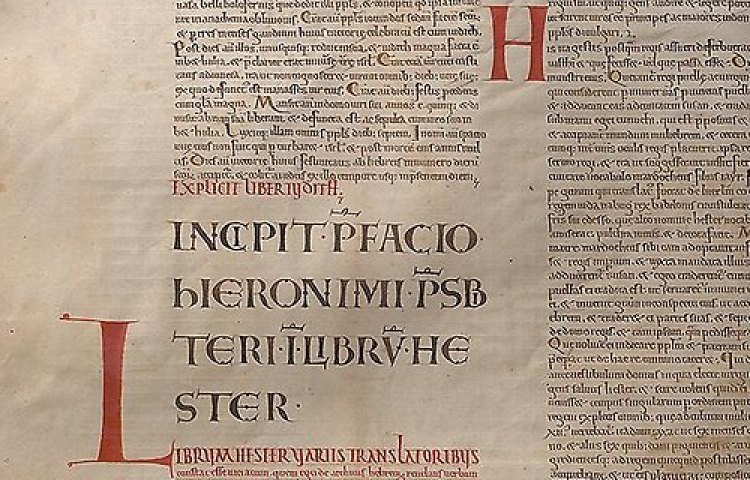
The Codex Gigas, or The Devil’s Bible, is the largest surviving medieval book. Written in the first half of the 13th century, the volume weighs about 165 pounds, has 620 pages, measures 36″ by 19″ by 8″ and required vellum from 160 animals to create its pages. The writing is so uniform that scholars agree one person must have written the entire text. They also contend it must have take at least 30 years to complete. But the myth of the magnificent Codex Gigas tells a different story: that it was written in one night by a monk who sold his soul to the Devil.
According to legend, leaders in a Bohemian monastery condemned a monk named Herman the Recluse for committing a terrible sin and walled him in a room where, trapped, he would eventually die. Pleading for release, Herman promised the monastic order that he’d write out the world’s largest book in a single night, and so they agreed. As the night progressed, Herman soon realized the task was impossible and called on the Devil for help. The Devil agreed to help him write the book in exchange for Herman’s soul. Through the night, the two completed the manuscript, which included a portrait of the Devil.
National Library of Sweden
The contents of the Codex Gigas are as fascinating as the story of the book’s genesis. The manuscript not only contains the Latin translation of the medieval Bible, which has a slightly different format to the modern Bible, but it also includes particularly relevant and popular writings of the medieval age. Some of those include: works of the Jewish historian Josephus Flavius, who wrote during the first century A.D.; 7th century Archbishop Isidorus‘ book Etymologiae, the first Christian encyclopedia composed from ancient sources; Medica, a standard medical book professionals used during the medieval age; Cosmas, which chronicled the history of Bohemia; and the Confessions, a list of sins accompanied by confessions. Perhaps the most fascinating to scholars is the book’s Incantations section, which lists various spells on how to cast out demons, heal the sick and conjure spells.
The Codex eventually found its way to the king of Bohemia, Rudolf II, but ultimately came to its current home in Sweden in 1649 after Swedish soldiers invaded Prague. When they captured the book, the Swedes took it home to their National Library where you can still see it on display today. Maybe you can decide for yourself whether the tome was completed over decades, or in one night with a little help from the dark side.