Lavinia Fisher is credited as being America’s first female serial killer. She and her husband John owned an inn where people checked in and often did not check out. The legends about Lavinia Fisher have lingered on long after her execution in 1820, but historians wonder how much her infamous legacy is true. Since not much is known about Lavinia, how could we be sure the terrifying tales of murder are factual?
As the story goes, Lavinia was born in the late 18th century and probably lived in South Carolina for most, if not all, of her life. She married John Fisher who was also a convicted bank robber. According to legend, John and Lavinia opened the The Six Mile Wayfarer Inn, six miles outside of Charleston. It didn’t take long for the sheriff to hear reports about guests at the hotel going missing. Only a few of the complaints were taken seriously and without any substantial evidence, the sheriff dismissed most of them because the couple seemed nice.
Lavinia would supposedly invite male guests over for dinner and ask them several questions about themselves and their occupation. Essentially, she was sussing out how much money her guests had. She would only choose men so that she could flirt with them and seduce them into giving her valuable information about their fortune. She would then send her unsuspecting victims back to their room with a cup of poisoned tea. The tea would put them out at the very least, but just to be sure, John would sneak into the room and stab them. Other legends say there was a lever at the side of the bed that they would pull to drop the victim into a pit filled with other corpses.
The story continues that authorities eventually caught onto the murder scam after an incident with a fur trader who stayed at the inn. The trader, John Peoples, found Lavinia a little too friendly. Suspicious of her intent, he refused her tea and wound up sleeping in chair instead of the bed so he could be on guard in case someone assaulted him in the night. Peoples’ suspicion was right; in the middle of the night the trap door flung the bed open to a cellar where John Fisher waited with an axe. Peoples escaped the terror through a window and alerted authorities.
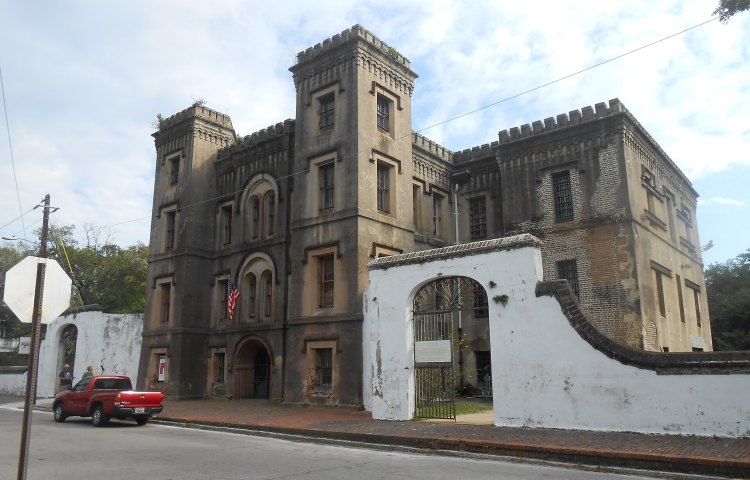
Lavinia and John Fisher were hanged in 1820 for their crimes. But interestingly, the crime they were convicted for wasn’t murder; it was highway robbery. In fact, Lavinia and John never even faced murder charges. Some historians take this as proof that Lavinia and John were not vicious serial killers, just thieves part of notorious group of robbers known as The Six Mile Gang.
Here is the more plausible history. Fed up with highway robbery effecting their business, a band of wagon traders took matters into their own hands by burning down the Six Mile House—not an inn, but the gang’s favorite hang out spot. The event resulted in some violent fights, which involved a man named John Peoples, who, after identifying the culprits, ran back to Charleston authorities.
It was only when the Fishers were taken into custody for the involvement in robberies and gang activity that authorities discovered a grave with the remains of two bodies about two hundred yards from the burnt down Six Mile House. But as Pat Hendrix explains in Murder and Mayhem in the Holy City, it’s hard to point fingers at only the Fishers. With squatters and people moving in and out of the area, who really knows who was responsible for the murders.
What is true is that Lavinia and her husband were both hanged for their crimes–even after trying to esacpe. And those crimes did not include murder. Moments before her execution, Lavinia is reported to have said to the crowd “If any of you have a message for the devil, tell me now– for I will be seeing him soon.” With parting words like those, it’s no wonder she left a big legacy behind even if she probably wasn’t America’s first female serial killer.