On TLC’s polygamous family reality show, Sister Wives, the three wives laugh off the idea of brother husbands. One man with a multiple wives is reality; one woman with multiple husbands is a joke. But not everybody finds the notion of polyandry that funny. In fact, polyandry is a real practice that’s been accepted throughout history all over the world including in Asia, Africa and even among several North and South American native tribes.
There are various reasons for the emergence of polyandrous societies that have existed—and some continue to exist—all over the world. Anthropologists Katherine Starkweather and Raymond Hames note in their recent paper “A Survey of Non-Classical Polyandry,” published in Human Nature: “Polyandry constitutes a variation on the common, evolutionarily-adaptive phenomenon of pair-bonding — a variation that sometimes emerges in response to environmental conditions.”
An example of this phenomenon are the polyandrous communities in Tibet where conditions can be rigorous. In these often egalitarian cultures, men outnumber women and resources are scarce. For their tribe’s own survival it wouldn’t make much sense for men and women to partner off. Disparate land can also be a contributing factor. That is why a lack of farmland in Tibet can lead a family to marry off all of its men to one woman. This way they can all work one plot of land rather than scrounge for individual plots to farm. This form of polyandry continues to be widely practiced in Tibet for this reason, despite it being technically illegal.
Another example of polyandrous societies is in places with high adult male mortality. In these cases, the first husband would arrange for his wife to take on another husband for protection in his absence. Frequently, it is an older brother or other relative, someone who the couple trusts. And, thus, this type of polyandry is known as “fraternal polyandry.” It was practiced by several indigenous tribes including the Inuits, Shoshoni and Pawnee as well as the late antiquity Hephalite tribe in Northern China. In fact, the women used to wear hats that had horns on the them, one for each husband.
Fraternal polyandry is still widely practiced in Tibet and Nepal, mountainous regions where fertile land is scarce and the populations are small. In these areas, fraternal polyandry has seemingly always existed and has been considered the “ideal form of marriage and family.” Traditionally, the marriage is arranged amongst the parents like a business deal and then the daughter is sent to live with the brothers she was marrying. Once the marriage occurs, the wife treats all the husbands equally in terms of respect, expectations and sex. Children of these marriages also tend to view their “fathers” equally even if they know who their father technically is. In some marriages, the oldest brother is considered the dominant husband or the “head of the household” while in others there is no such title.
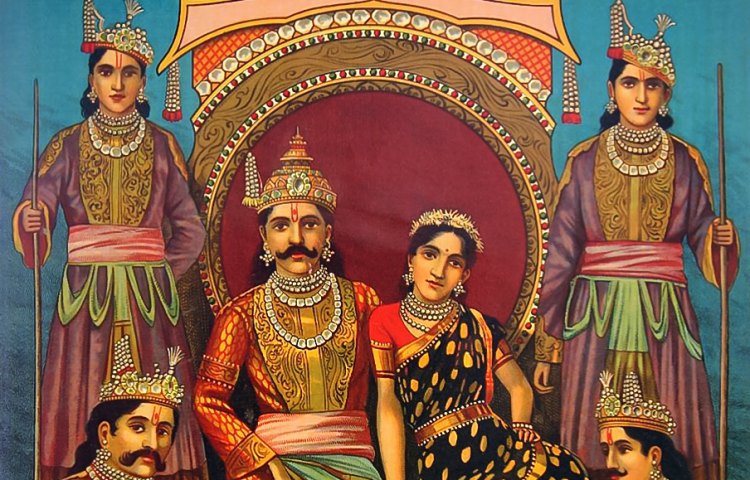
Today, Himalayan communities are the most studied example of polyandrous societies for the simple reason that it’s still practiced among tribes there, such as the Lahal-Spiti as well as the Sherpas. Further south in India, polyandry has had a very long history. While it was once practiced in regions throughout the country and even depicted in the Hindu epic poem “Mahabaratha,” it is now subscribed to by more rural tribes. In Sri Lanka, however, polyandry is actually protected under law. Under the Kandyan Marriage Law, women are permitted to be married to multiple men. In modern Sri Lanka, the practice often starts with a monogamous relationship that then expands with a partner of the wife’s choosing.
As for other parts of the modern world, there are certainly still African tribes such as the Masai and the Irigwe that marry women to multiple husbands, but polyandry is otherwise rare. While it was heavily practiced among Native American tribes for centuries, most tribes have now assimilated into American culture and only practice monogamy.
Is divorce evident in polyandry? In some cases, yes. For example, in Tibetan fraternal marriages if a husband wants to separate from the marriage he simply leaves the house. He is then expected to move into his own home separate from his former family’s. The same was acceptable for Native American tribes such as the Pawnee. If a man wanted to leave the marriage, he gathered his belongings and left their home.
As alien as a polyandrous society might seem, it’s actually been an acceptable practice for as long as other forms of marriage have, and it is still being practiced today as a way to uphold a family’s standard of living. Ah, if only we could all live in a matriarchal, polyandrous society.