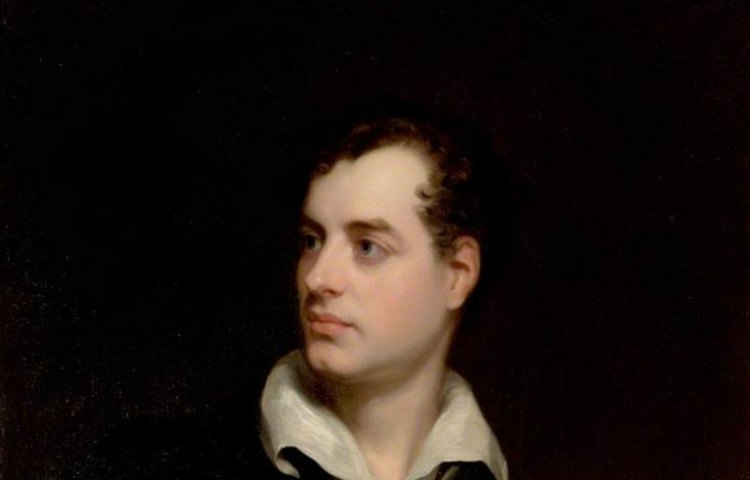
Thomas Phillips
Hemingway versus Faulkner. McCarthy versus Hellman. Gore Vidal versus everyone. History is full of sore losers and literary rivals. But no rivalry was quite as poetic—or as petty—as that of Lord Byron and John Keats. Here are three epic rounds of poetic posturing between the Romantics:
The Time Keats Complained About Byron’s Height
Though historians have split opinions on how poor Keats really was, he definitely did not feel at home in literary society. As a medical student, he was stuck in the middle class, and he felt intimidated by the flashy, tall Byron—who towered over his paltry five feet. “You see what it is to be six foot tall and a Lord!” Keats is said to have written to a friend upon reading an enraptured review of one of Byron’s famous poems.
Winner: Byron. Height insecurity is SO pre-Revolutionary.
The Time Byron Begrudged Keats a Good Review
When The Edinburgh Review gave Keats’ odes a rave review in 1820, Byron couldn’t bear the attention garnered by the poet, who made no bones about hating Byron’s work. “Of the praises of that little dirty blackguard KEATES in the Edinburgh,” wrote Byron, “I shall observe as Johnson did when Sheridan the actor got a pension. ‘What has he got a pension? then it is time that I should give up mine.’…all the men they have ever praised are degraded by that insane article.—Why don’t they review & praise ‘Solomon’s Guide to Health’ it is better sense—and as much poetry as Johnny Keates.”
Winner: Keats. Sour grapes are bitter fruit.
The Time Byron Wouldn’t Stop Gossiping About One of Keats’s Bad Reviews…After He Died
When The Quarterly Review published a damning piece accusing Keats of being part of “the Cockney School” of poetry (translation: poor upstart), Byron couldn’t stop laughing about it. “Is it true—what Shelley writes me that poor John Keats died at Rome of the Quarterly Review?” he wrote a friend. “I am very sorry for it—though I think he took the wrong line as a poet—and was spoilt by Cocknifying and Suburbing.”
The only problem? Keats actually did die in Rome—of tuberculosis, not a bad review. He was only 25. But though Byron was on the fast track to his own tragedy (he wouldn’t see 40), he couldn’t stop laughing about Keats’ misfortune. He even wrote Keats into his famous poem Don Juan:
John Keats, who was kill’d off by one critique,Just as he really promised something great,If not intelligible, without GreekContrived to talk about the gods of late,Much as they might have been supposed to speak.Poor fellow! His was an untoward fate;‘T is strange the mind, that very fiery particle,Should let itself be snuff’d out by an article.
Winner: Keats. Bad form, Byron. Bad form.