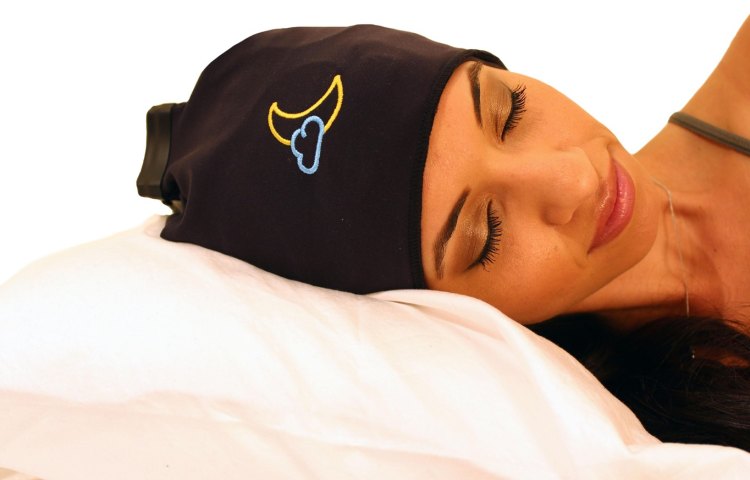
Researchers still have a lot to learn about sleep, such as why we need it in the first place, but anyone who has ever had a restless night knows firsthand how vital it is to daily life. Now, Michael Larson hopes to end sleep disorders altogether with the “Sleep Shepherd,” a hat that uses sound to quiet the mind and coax it into a restful slumber.
According to the Centers for Disease Control and Prevention (CDC), insufficient sleep is an epidemic in the United States with between 50-70 million people suffering from some sort of sleep disorder. Most of the time, these individuals turn to prescription sleep aids to help them get a night’s rest. However, as Larson found out after his daughter was prescribed sleep aids, many of these drugs cause adverse side effects, reports MIT.
After researching all he could about sleep in an effort to help his daughter, Larson realized that the brain slows down during sleep. So, instead of using drugs to make that happen, Larson came up with the Sleep Shepherd. According to MIT:
Larson found that the brain can be coaxed to slow its activity using audio tones called binaural beats, an auditory brainstem response caused by the interaction of two sounds that originate in opposite ears. The beat frequency would start out fast and would gradually decrease, causing the brain activity to do the same, to lead the brain into slower and deeper sleep states. The product that Larson developed is a sleep hat, named the Sleep Shepherd, which has thin speakers next to each ear and an EEG sensor to measure brain wave states.
The hat can also monitor and adjust the sounds it produces based off of the wearer’s brainwaves in real-time.
Sleep Shepherd
Larson, who successfully funded the project via Kickstarter last year, claims that numerous people have submitted testimonials advocating for the hat’s effectiveness. However, the Sleep Shepherd hasn’t undergone any scientific reviews yet. As the project’s site states:
Sleep Shepherd, LLC is currently working alongside a Harvard-trained physician to gather robust scientific data on the enhanced effect of the Virtual Hammock® Technology contained within the Sleep Shepherd®. Initial customer acceptance surveys have shown that participants who self-identified as poor sleepers, cited having less trouble falling asleep and experienced a deeper sleep when using the Sleep Shepherd. These findings are currently being presented to an Internal Review Board (IRB) to seek approval for further human trials. The results of this comprehensive study will be published to sleephat.com as they become available.
If the Sleep Sheperd successfully undergoes trials, it could offer a safer solution for sleep disorders. Until then, you can keep up with the project on its site.