In Homer’s The Odyssey, Odysseus sets out on a grand epic and comes in contact with many terrifying gods and monsters along his journey. One of the most fiercesome is a cyclops named Polyphemus who traps our dear adventurer in a cave:
So I spoke, but from his pitiless heart he made no answer, but sprang up and put forth his hands upon my comrades. Two of them at once he seized and dashed to the earth like puppies, [290] and the brain flowed forth upon the ground and wetted the earth. Then he cut them limb from limb and made ready his supper, and ate them as a mountain-nurtured lion, leaving naught—ate the entrails, and the flesh, and the marrowy bones.
These monsters were not just the stuff of fictional stories, though. They were supposedly real monsters who stalked the distant islands and ate goats and lost travelers. According to National Geographic, they were giant men with large teeth or tusks that had one giant eye. So where does this myth come from?
As it turns out, the myth comes from fossils. In particular, mammoth bones like this:
Cropbot
The theory goes that ancient Greeks came across a giant mammoth fossil buried on the island of Crete and believe it be from a large creatures still wandering around causing destruction. Imagine you had no concept of dinosaurs until you found a Tyrannosaurus rex skull in your backyard—you’d probably be on the look out for the beast that’s coming to eat you.
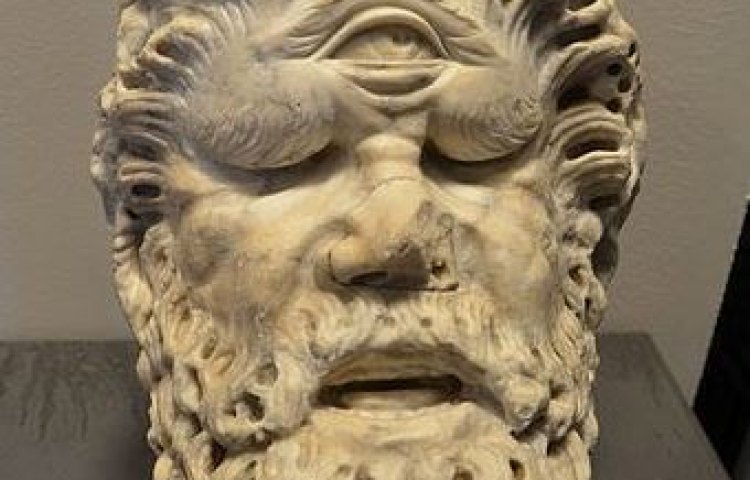
According to the American Museum of Natural History, the confusion over the creature’s one eye stems from the way a mammoth skull looks once the tusks are worn away. To illustrate this, here is a picture of what ancient Greeks thought a cyclops looked like:
University of Texas
And here’s what the skull of a mammoth looks like:
American Museum of Natural History
The large hole in the middle of skull, which ancient Greeks thought was an eye socket, is actually where the creature’s trunk would have connected to its head. The large section of bone at the bottom gives the impression of a large jaw and the looped sections on either side easily resemble ears. When you put all this together, you get the mold of a cyclops.
As time went on, the cyclops myth became the thing we know it as today. So the next time you see a cyclops in a monster movie, remember that it was created out of the fear that these things actually roamed the earth, which, in a way, they did.
(h/t Reddit)