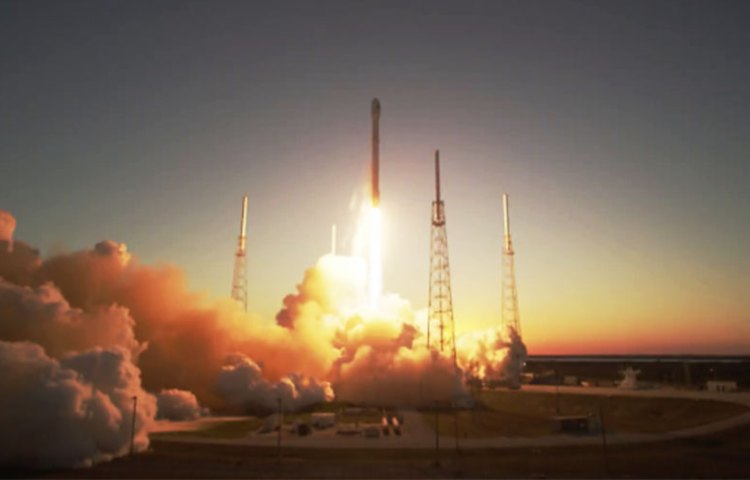
We need rockets to launch us, or our things (i.e. satellites), into space. But rockets are incredibly expensive and currently meant for one-time use. Creating a reusable launcher would make space travel drastically more affordable. SpaceX CEO Elon Musk has claimed repeatedly that average launch costs per pound will come down by a staggering 100 times if it can make both the stages of its Falcon 9 rocket commercially reusable. So SpaceX is working on it. They’re not quite there. But they’re pretty close.
SpaceX had been perfecting the complex technical maneuvers needed to launch and safely land a rocket vertically with its Grasshopper test vehicle and had the first successful test flight of its new version (called v1.1) Falcon 9 rocket in October last year. Musk has compared it to basically landing a 14-story building on a floating landing pad. But that doesn’t mean it’s impossible.
On February 11, 2015, on its second attempt (after a failed January attempt), SpaceX achieved a near perfect ocean splashdown of its reusable Falcon 9. They almost pulled it off, but stormy weather interrupted the mission.
Despite the failure, there are some things to be celebrated. On February 11, not only did Falcon 9 achieve a near perfect splashdown, only 10m from the drone ship barge on which it was supposed to land, but it also successfully launched NASA’s Deep Space Climate Observatory (DSCOVR) satellite. A joint collaboration between NASA, NOAA, and the US Air Force, DSCOVR was put in orbit to give us the Paul Revere warning about impending solar storms.
A year before the DSCOVR mission, SpaceX attempted to land the reusable Falcon 9 vertically on top of the floating barge in the Atlantic, after the Dragon space capsule made a cargo delivery to the International Space Station. While descending back to Earth, the rocket lost control at the last minute, hitting the barge sideways before exploding. Two other flights in early February were called off due to a faulty radar and poor weather. So there’s definitely been progress!
Elon Musk has stressed time and again that average spaceflight costs can come down by a factor of 100 once reusable space rockets become commercially ready. SpaceX estimated in 2012 that with current Falcon 9 launch costs at $2,240 per pound, they will come down to less than $100 per pound. Maybe soon we can all afford rockets! Road trip?
Read more:
The SpaceX Reusable Rocket Landing Probably Won’t Work But It’s Still Really Cool
NASA’s Wants to Send a Space Submarine to Saturn’s Largest Moon
SpaceX Is Hiring a Farmer—a Space Farmer