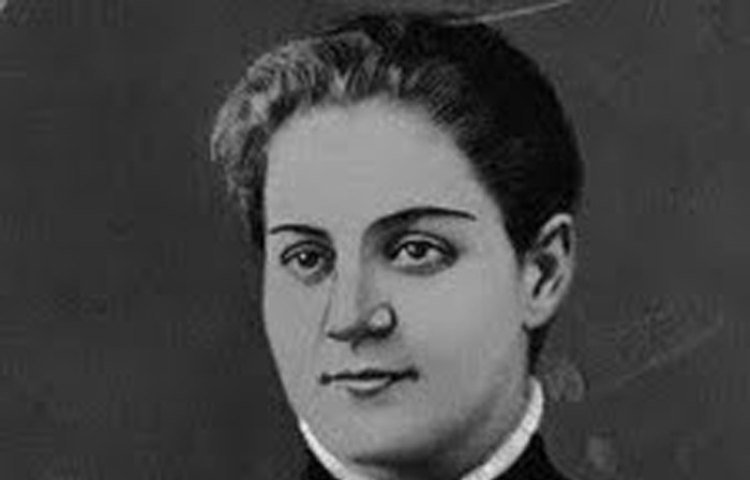
There’s no doubt that Jane Toppan earned her nickname as “the nightmare nurse” fair and square. She was truly a nightmare. While supposedly tending to the sick and weak, Toppan took advantage of her position as a nurse to prey upon patients, administering dangerous doses of morphine and other drugs to take them on rollercoasters of consciousness until ultimately succumbing to perfectly choreographed deaths.
Toppan’s traumatic early life likely left her unstable. Born Honora Kelley, Toppan essentially grew up as an orphan. Her mother died when she was young and her alcoholic, abusive father, Paul Kelley, was known around Boston as “Kelley the Crack,” if that gives any indication of his character. He took his young daughters to the Boston Female Asylum, an orphanage, and left them there. After a few years at the asylum, Jane was placed as an indentured servant in the Toppan household. Though she was not officially adopted by the family, she took their surname and gave herself a new identity.
By 1885, Toppan began training as a nurse at Cambridge Hospital. Her outgoing personality got her dubbed “Jolly Jane” by her coworkers—ironic, considering she almost immediately began her sadistic experiments. Toppan used her patients as human guinea pigs, altering dosages to see how their nervous systems reacted. She enjoyed sedating a patient and then bringing them into a heightened delirious state with atropine, toying with their nervous system until delivering the fatal blow. Allegedly, she found this incredibly arousing. One patient, Amelia Phinney, remembered that she awoke to Jane on top of her in bed. According to her story, Jane caressed her as she attempted to make the patient drink poisoned mineral water. Jane only stopped when she was startled by the sounds of someone coming into the room. Phinney thought she dreamt this until she heard of Jane’s arrest.
From Cambridge, Toppan was hired to work at Mass General, but she was fired when the hospital became suspicious of the number of patients who died under her care. But her killing spree wasn’t over yet.
Toppan didn’t need sick patients to practice her craft on. She killed anyone who got in the way of her goals. She poisoned her landlords in order to get out of paying rent. She killed someone who had a job that she wanted at a seminary. She even poisoned her foster sister, Elizabeth Brigham, by feeding her homemade (poisoned) treats while on a picnic. Two days later, Brigham was dead. Toppan confessed later to the killing saying, “I held her in my arms and watched with delight as she gasped her life out.”
But perhaps Toppan went a little too far when she thought she could get away with killing an entire family. Accounts vary, but the gist of the story goes like this: Mattie Davis, Toppan’s friend, traveled to the cottage where Toppan lived to help settle a rent dispute between Toppan and her landlords, Melvin and Eliza Beedle (unbeknownst to Davis, Toppan was already poisoning the Beedles). Confronted, Toppan did what she did in any situation when backed into a corner: she slipped Davis poisoned water and then helped her “feel better” by administering deadly doses of morphine. Mattie Davis died on July 5, 1901.
But the story gets even more chilling. Moved by what their mother’s dear friend Jane Toppan said at Davis’s memorial service, the family invited Toppan to become their in-house nurse. And so came the murder of an entire family. First went the eldest Davis daughter, then Davis’s widower, Alden, and then the only surviving daughter, Mary Gibbs. By August, the Davis family was exterminated.
But, Jane Toppan, like any woman, did have a weakness. She was in love with her foster sister’s widower Oramel, and she would do anything to have him, like killing Oramel’s sister because she was in the way. She even thought poisoning him and nursing him back to health would make him fall in love with her. None of her usual tactics worked, and ultimately Oramel kicked the murderess out.
Around the same time (when it rains, it pours), Mary Gibbs’ husband, Captain Gibbs, returned from sea to a terrible reality: his wife and her whole family were dead. Gibbs was immediately suspicious of Toppan and asked the police to exhume the bodies for autopsies.
On October 29, 1901 Toppan was arrested for the murder of Mary Gibbs. By 1902, she confessed to 11 murders, although Toppan revealed to her lawyer that she killed at least 31 people. The number could actually be as high as 70 to 100 homicides.
Her trial did not last long. On June 23, 1902, the deliberation took all of 27 minutes to determine her insanity. She was sent to Taunton State Hospital for the remainder of her life. According to guards, she spent her final days paranoid that the asylum was going to poison her.
Why did she do all this? Was she honestly insane? Soon after her sentencing, William Randolph Hearst published her “confession” from her lawyer in The New York Journal. The authenticity of her confession is up for debate, but in it Toppan is smug about fooling a panel of experts into thinking she is insane:
Yes, I killed all of them! I might have killed George Nichols and his sister that night if the detective hadn’t taken me away.[…] I fooled them all—I fooled the stupid ignorant doctors and the ignorant relatives. I’ve been fooling them for years and years.
But maybe all of this madness could have been stopped. According to Toppan, “If I had been married I would not have killed all of those people.” Or maybe she would have just killed her husband.