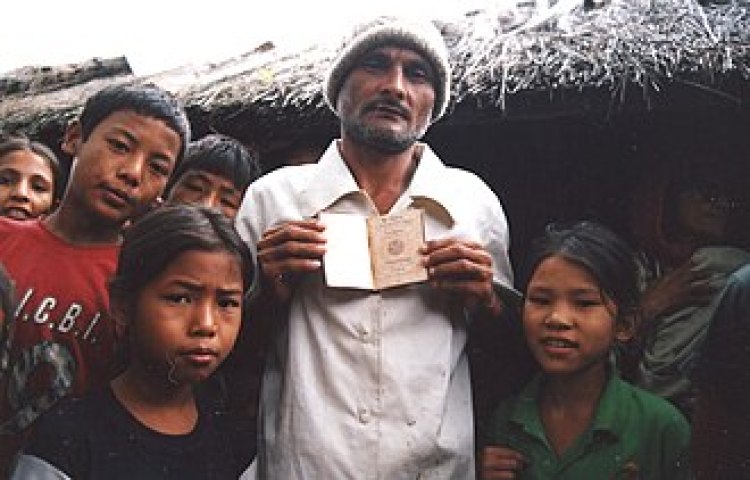
Over 100,000 Lhotshampas, ethnic Nepalis from southern Bhutan, have been kicked out of their homeland since 1989. Most refugees fled, or were pushed out, to neighboring Nepal where they awaited a chance to return to their homeland. Two decades later they were still waiting. Finally in 2008, the U.S. stepped in to assist the refugees by placing a majority of them in other countries. Since then, over 4,000 Bhutanese refugees have fled camps in Nepal to find a new home in an unlikely place: Pittsburgh, Pennsylvania.
The story starts back in the mid-19th century when many Nepalis traveled to Bhutan for work, mostly farmers. The population of Nepalis in southern Bhutan rose quickly but peacefully. This peace lasted until 1988 when a census labeled many ethnically-linked Nepalis, Lhotshampas, as illegal immigrants even though many of them lived in the country their entire lives.
Laws were quickly passed in attempt to push out the Lhotshampas by making Bhutan an unfavorable place to live, including taking the Nepali language out of schools, enforcing dress codes and closing Hindu seminaries. Not surprisingly, protests led by the Bhutan People’s Party shortly followed, which often used violent tactics to garner attention. The protests only made things worse; it gave the Bhutanese government more concrete grounds on which to argue that the Lhotshampas be deported.
In 1991, soldiers started rounding up the remaining Lhotshampas and forcing them to sign papers claiming they were staging a war against the government. To force their signatures they often tortured the men of Lhotshampa families by detaining them in makeshift military compounds where they were forced into hard labor with little food. Detainees were forced to drink urine, underwent finger piercing and were weighed down with blocks of wood. Many eventually signed the documents and were then allotted a short time to get out of the country. Most of the refugees settled in U.N. monitored shelters in Nepal where they waited to be allowed back into their home. But that day would never come. Nearly two and a half decades later, the waiting game has not changed.
Even though Bhutanese refugees still yearn for their homeland, the international community has stepped up aid by offering resettlement. The U.S. agreed to allow 60,000 refugees resettlement in America. While other countries, such as, Australia, Canada, Norway, Netherlands and Denmark agreed to resettle 10,000 each. In the U.S., refugees have found somewhat of an unlikely home in small communities surrounding Pittsburgh.
So, what makes Pittsburgh the ideal place for refugees from halfway around the world? Well, Pittsburgh offers refugees cheap housing and a pretty reliable transit system. On top of that, local non-profits offer refugees help with getting Social Security cards and jobs and even offer to pay rent for the first three months. But the exodus isn’t just one-sided. City officials also believe strengthening cultural diversity will help revitalize urban areas left in industrial squalor following massive steel mill closures, like the small neighborhood of Carrick, where over 500 refugees call home.
Moving from U.N. refugee shelters in a warm climate to predominately poor housing complexes in Pittsburgh has been a challenge for the Lhotshampas. Winters are especially rough because most refugees are completely alien to such cold. They don’t know how to properly insulate their houses or dress to battle the temperature drops. The language barrier makes it hard for them to navigate the bus routes and interview for jobs. The new renters have also been taken advantage of as their cheap housing can often lead to slum-like conditions. One landlord in Carrick was ordered to find new housing for dozens of refugees after building inspectors found 347 violations on the property. Tenants even had to run garden hoses into their apartments for drinking water.
Culture shock, living conditions, the inability to find reliable work and the knowledge that they will likely never see their homeland again causes severe depression. Refugees commit suicide at a much higher rate than most American groups. Twenty percent of refugees are depressed, which is also higher than the national average.
The plight of the Lhotshampa continues with still thousands waiting to return home in Nepal. Although, as the communities they now inhabit in the U.S. are slowly warming up to them, there remains a hopefulness that they will find happiness. Community activities such as gardening are bringing refugees and their neighbors closer, which will hopefully ease them into their new homes and into this thing we call “The American Dream.”