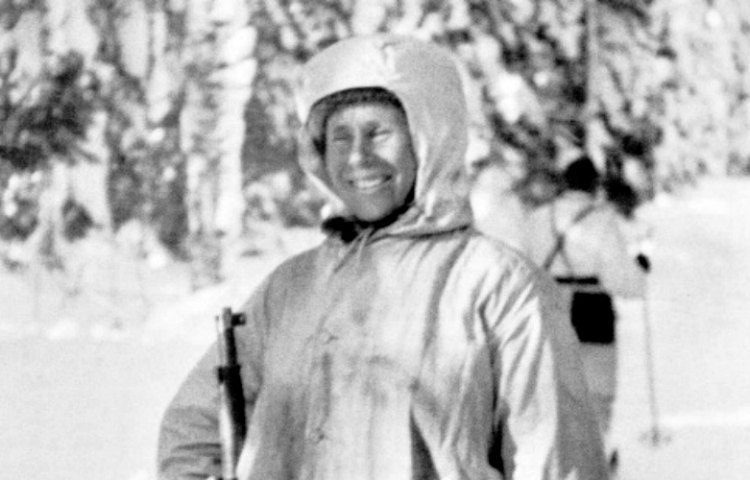
Chris Kyle may have the most confirmed sniper kills in U.S. history with 160, but Simo Hayha, a Finnish sniper during the Winter War between Finland and Russia, holds the title of deadliest sniper ever with 505 kills in only 100 days of conflict.
Born in 1905, Hayha was a farmer and hunter before entering into Finland’s army in 1925. Hayha quickly distinguished himself as a sharpshooter and took home countless awards for marksmanship, with which he reportedly filled his living room.
Then, in November 1939, the Winter War broke out when Soviet forces invaded Finland in an attempt to gain more territory. Treating Russian soldiers like clay pigeons, Hayha put his shooting skills to use. During the conflict, which only lasted around 100 days, Hayha killed 505 Soviet troops, an average of five per day.
Clad in all white to blend in with the snowy landscape, Hayha earned the nickname “White Death” by the Soviet forces. Unlike most snipers, Hayha refused to use a telescopic lens. Instead, he preferred iron sights because they didn’t reflect light that could give away his position to enemies. He also chewed on snow to cut down the amount of steam exhaled with each breath.
The Russians, who did not use white camouflage like Finnish troops did, stood out starkly against the white backdrop. Hayha simply picked them off one by one. Needless to say, the Soviet army tried numerous strategies to thwart Hayha, from counter sniping to artillery strikes. Russia eventually did take Hayha off the field of battle when a soldier shot him in the face, putting him in a coma.
Despite the bullet taking off nearly half of his face, Hayha survived the injury. By the time he awoke, the war had ended after a peace treaty was signed between the two nations. Finland ended up giving Russia the territory Hayha fought so hard to protect.
When asked later how he felt about killing so many people, Hayha remarked, “I did what I was told to the best I could.” After World War II, Hayha became a moose hunter and dog breeder. He died in April 2002. He was 96.