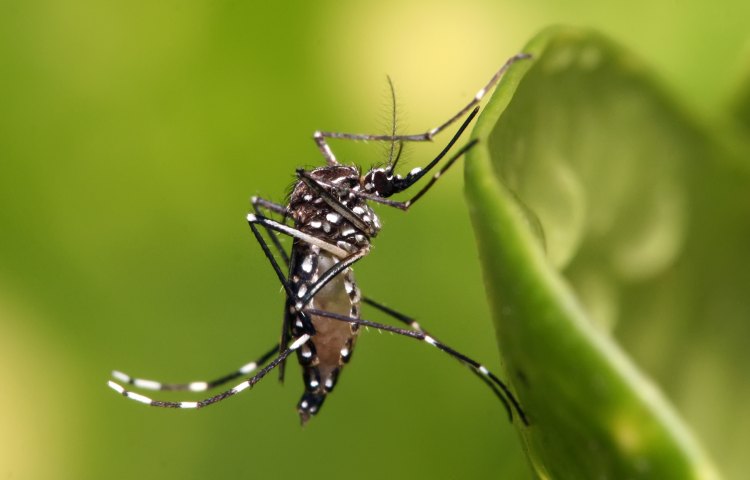
When most of us think about the dangers posed by mosquitoes (beyond just the annoyance of a bite), we think of the multitudinous diseases they carry. This is fair, given that these little parasite bags kill up to a million people via malaria alone each year, not to mention the many thousands of cases of chikungunya, dengue, encephalitis, Rift Valley fever and yellow fever that they cause each year. But it turns out there’s another way mosquitoes can kill you—it’s not common, but it’s disturbing. Apparently these flying freaks can literally choke animals out with sheer numbers.
Mosquitoes are not just prodigious disease vectors. They’re prodigious breeders too. A common mosquito can give birth to up to 3,000 progeny in her lifetime. In some regions where the fetid waterways these critters love to spawn in are plentiful and pristine, like the Florida Everglades, this can lead to massive hatching swarms large enough that traps in the region catch up to a pound of mosquitoes (over one million bugs) in a night.
Some have suggested that these massive swarms were a key force motivating Native American seasonal migrations on the eastern seaboard. Others believe they may be able to harry cattle and the like to such an extent (a la David Foster Wallace’s disturbing image of Midwestern livestock being drained of all their blood, found skeletal and splayed by farmers) that the sheer stress of their numbers can lower beef and dairy production to a perceptible degree.
These swarms are especially intense in the boggy lands of the far north when arctic ices thaw—inhospitable climates where the numbers game is even more important to mosquitoes’ survival. Folks in arctic regions tell horror stories of losing chunks of skin to whirlwinds of mosquitoes, or slapping their backs to find their hands smeared with blood. Some arctic folks even claim that the swarms get so thick that it can be hard for them to breathe.
That last tidbit may not be hyperbole. There’ve been famous stories out of the arctic about caribou wandering through swarms of mosquitoes so thick that they can’t help but breathe in so many that they die of asphyxiation. At first this seems like it might just be an oddity, but it turns out such cases of mosquito-based asphyxiation have popped up elsewhere in better documented events. In 1988 the Ocala Star Banner of Naples, Florida reported on the death of three cows to mosquito asphyxiation and referenced the loss of 50 cattle in Fort Myers, Florida to the same cause in 1973. And just last year a photographer in Portugal managed to capture an image of a mosquito tornado—a swarm of bugs 1,000 feet tall traveling across the land in a black column. Although there appear to have been no reports of mosquito-based asphyxiation in that event, one can imagine seeing something like it or worse before choking to death on bloodsucking fiends.
For all the horror of the idea of choking on mosquitoes, bites are still more dangerous. Just one can be fatal in a worst-case scenario. Although DEET is an effective repellant, it only lasts so long, and most alternatives on the market offer even less protection. So chances are despite our best precautions, we’re going to get bitten as well. Luckily for those in the far northern lands of caribou-asphyxiating clouds, their climates are cold enough that most deadly parasites cannot survive, so diseases are pretty much non-existent. Yet in a way that just makes it all the more insidious that mosquitoes find a way to cause death even where their diseases can do no harm.