In 1776, George Washington visited a young woman named Betsy Ross and charged her with making the first American flag. Or so the story goes—in fact, it seems that this legendary act of patriotism with a needle and thread was probably a family myth.
There definitely was a Betsy Ross—she was born Elizabeth Phoebe Griscom in Pennsylvania in 1752. Like many American colonists, she was a Quaker, but when she fell in love with an Anglican minister, she faced the disapproval of her strict family. She defied them and married for love anyway, continuing the job in upholstery she had trained for as a girl.
The Revolutionary War claimed 217,000 lives, including that of Betsy’s new husband. Now a widow, Betsy continued with her upholstery trade in a shop in Philadelphia. Some historians have speculated that she was the “beautiful young widow” whose charms kept a Hessian anti-Revolutionary colonel from bringing his troops to the Battle of Trenton during the war, but it seems more likely that she instead stuck to her lucrative business supplying Revolutionary troops with things like tents, mended uniforms and even flags.
While there’s little doubt that Betsy (who remarried two times more) was “one of Philelphia’s most important flag makers of the Revolution” and a primary flag contractor during the War of 1812, there’s actually “no plausible proof” that she designed or sewed the first American flag. In the 1870s, nearly 40 years after her death, her grandson gave a speech to the Historical Society of Pennsylvania about his grandmother’s supposed achievement of coming up with five-pointed stars and sewing the flag after a visit from George Washington. Other grandchildren wrote and signed affidavits that claimed she was approached by George Washington and asked to design and sew a flag.
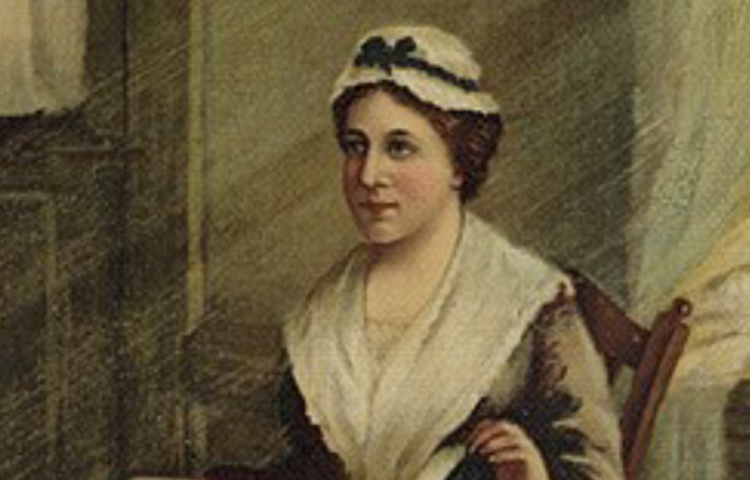
The story caught on, stoked by centennial patriotism and a hugely popular painting of Betsy sewing the flag. Voila—a myth was made. Historian Laura Thatcher Ulrich points out that the Ross myth makes sense when you consider people’s desire to pinpoint moments in history to important individuals rather than acknowledge smaller, incremental change. Add a dash of patriotism, a culture of flag worship, and a bit of tourism (see: Philadelphia’s Betsy Ross House), and it makes sense that the story has survived so many years, even spawning a postage stamp. But maybe the real tragedy is that people find Betsy Ross’s story of survival, business ownership and contribution to Revolutionary Philadelphia moot if she didn’t invent the flag, too.