We tend to think of superstition as a quirk of the old-world, but when it comes to animals, that’s not true. Modern superstitions dictate that some animals bring bad omens, and that others have qualities we can exploit to bring us good luck or cure ailments. Superstitions vary, but they have one thing in common: not a shred of evidence to support their claims.
Rhino
Probably the most striking case of animal superstition gripping the world right now involves rhinos, which are being poached mostly in South Africa for their horns. Even though these spikes are just made of keratin—what makes up our nails—many Asian markets deem it a viable treatment for low libido, among other things. This has made rhino horn enormously popular, and poachers supply traffickers with horns that get sent across the globe.
The poaching is brutal: poachers will kill rhinoceroses, cut off their horns with a chain saw and leave their bodies to rot. Although China has banned sales of the horn, the demand remains alive in the black market, going for around $27,000 per pound in Taiwan in 1990. This year alone, almost 700 rhinos have already been poached from South Africa for their horns.
Owls
In India, the popular festival known as Diwali celebrates life—but unfortunately, at the expense of owls. To please Lakshmi, the goddess of wealth, witch doctors have created a market in illegally caught and trafficked owls so that people can purchase them—or their parts—as material for a sacrifice. Talons and feathers may be used to get rid of bad spirits, while other parts can be used to counter illness. Half of India’s owl species are part of this trade, and many of those are threatened, or in some cases even critically endangered.
Aye-aye
Native to Madagascar, these primates are known for their curious nature—which works against them when they encounter suspicious humans. The fear of this big-eyed tree dweller centers on its long middle finger, which is believed to signal impending death if it points in your direction. In reality, it’s all about lunch: aye-ayes use this harmless appendage to tap on trees to find hollow parts where bugs may be. The long finger then doubles as a hook, used to extract the unwitting insect. Unfortunately, the awkward little lemur frightens the people of Madagascar so much, they tend to kill the species on site.
Asiatic black bears
In decades gone by, intensive hunting of these bears in Asia drove down their population. But it wasn’t about their meat or fur. Hunters saw the real treasure as an organ otherwise considered fairly grim: the gallbladder. Today, the interest has grown so large that bears are kept in captivity and ‘farmed’ for their bile, which is what’s contained in the gallbladder. That bile is falsely believed to cure everything from hair loss to sprained ankles and epilepsy. The bile extraction involves inserting tubes into the bears to “milk” them. Bear keepers drain the bile from bears for years, starting with the young until they’re old enough to be killed, which then enables keepers to sell the gallbladders for over $25,000 each.
Bats
Since some of these winged creatures sup on blood—usually from horses or cattle, but very rarely from humans—they’ve been described in Western folklore as harbingers of death; creatures that bring bad luck on the wing. It’s a description that has unfortunately stuck, and even today, these airborne mammals are killed in their millions around the world because of superstition, misinformation, and fear—perhaps best represented by the myth of hair-entangled bats.
More recently in the U.S., bats have also been put in danger by an invasive fungus that is killing them off in spades. Bats, although they may seem scary, are essential to the ecosystem; they keep the massive population of mosquitos and insects in check.
Tokay gecko
Reptiles in general are bewitched with their (un)fair share of human superstition, but in recent years this particular creature has come under the spotlight for its supposed ability to treat AIDS. This has led to a heightened trade in wild-caught Tokays, despite the complete lack of evidence showing that these reptiles can ease symptoms of the disease. While the AIDS myth has subsided a bit, bt their value in traditional medicine persists, which is pushing their population toward the brink.
Pangolins
The International Union for Conservation of Nature (IUCN) describes the pangolin as something that looks like “an artichoke with legs and a tail,” which might explain why there’s such a huge appetite for this creature. Pangolins are now the most illegally traded mammal in the world, sold for their meat and also for their scales, which are viewed by proponents of traditional medicine as a useful cure for weak circulation, among other things. Little is known about the trafficking of these animals–where they come from and where they end up–making it incredibly difficult to tackle the problem.Together with the culinary demand, this has driven some species into the “critically endangered” bracket.
Sharks
Fear of sharks is its own kind of superstition, but another irrational belief that might be putting them at risk is the idea that their cartilage can be used to cure cancer—even though there is no evidence to support these claims. Shark cartilage is sold in many stores across the U.S., Europe, and the U.K.—often as a supplement—but because the source of the product is often hard to trace, there’s often no guarantee that products are from sustainable sources, and that they aren’t driving down populations of endangered sharks too.
Musk deer
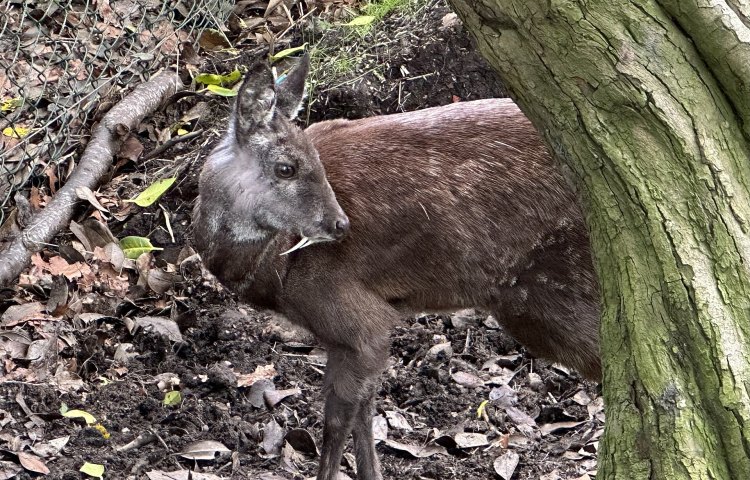
(Updated: Nov. 4, 2014): The musk deer has been spotted for the first time in 60 years in the Nuristan Province of Afghanistan. Evidence, including five confirmed sightings, of the freaky-looking vampire deer was found during a survey and published in the journal Oryx. This is good news since the species scent glands are more valuable by weight than gold, fetch over $45,000 per kilo on the black market.
These guys are targeted for—you guessed it—their potent musk. This odorous wax, secreted from scent glands on male deer, is extracted for use in hundreds of traditional remedies whose users believe that the scent can treat circulation problems and act as a sedative, among other things. Unfortunately, extracting the musk often means killing the deer—which is why most species now reside on the IUCN’s “endangered” list.
Cats
OK, so cats aren’t truly threatened in the present day, but historical fear of these felines has fueled one of the longest standing superstitions. When, in Medieval times in Europe—often at the hands of the religious institutions—cats became a scapegoat for crimes and inexplicable events, they were associated in people’s minds with witches, evil deeds, and the devil, meaning thousands were burned alive, hung, and even taken to court and tried for their supposed crimes. However, they have earned their retribution: today we’re more inclined to worship cats than kill them off.
Worried about the dangers these amazing animals are in? You can learn more about conserving wildlife and how you can help with your money or time here: