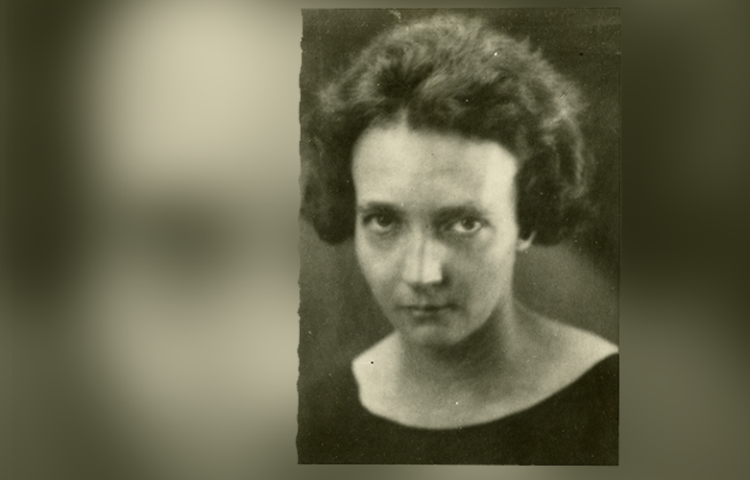
What's it like to be the daughter of a Nobel Prize-winning trailblazer? For Irène Joliot-Curie, it was one thing, all right: inspiring. In fact, Irène herself won a Nobel Prize for chemistry, but her contributions are much less known than those of her famous mother, Marie Curie.
Though Irène's talents seem to have fallen squarely on the "nature" side of the nature versus nurture debate, she had some incredible nurture to thank in part for her intellectual prowess. Recognizing that her daughter had an extraordinary head for math and science, Marie Curie gave her math and science problems and enrolled her in "The Cooperative," a kind of genius homeschooling program put together by some of her most formidable academic colleagues. Marie even enlisted Irène's help in her World War I experiment to bring X-rays to the trenches. The eighteen-year-old found herself at the front, driving X-ray vans and acting as a combination radiographer and nurse as she used her mother's equipment to help diagnose and locate shrapnel wounds.
After returning from the war, Irène met and married Frédéric Joliot, forming a husband-wife partnership as formidable as that of her father and mother. Together, Frédéric and Irène set out to conquer the atom. First, they focused their studies on the physical structure of the atom, paving the way for the discovery of both the positron and the neutron (they actually discovered both, but did not realize the significance of their work and were eventually beat to the announcement of their discovery). Then they went to work on "artificial radiation," a process by which they bombarded existing elements with particles to create new radioactive elements. The process they discovered stunned the scientific community: now radioactive elements could be produced inexpensively instead of requiring years of work to isolate. They were awarded 1935's Nobel Prize in chemistry for their achievement.
But Irène worried about the weight of her work. Could her discoveries lead to evil and not good? These questions concerned her more and more as fascism marched across Europe. A dedicated antifascist, Irène realized that her discoveries and her work with the team that had piggybacked off of her work to discover nuclear fission could be used on behalf of beliefs she found abhorrent. After a crisis of conscience, she broke with her mother's tradition of transparency. In October 1939, Irène and Frédéric placed a sealed envelope in a vault at the Académie des Sciences. It contained documentation of their research on nuclear reactors.
By the time Irene Curie's research came out of the vault ten years later, Irène was already showing signs of the leukemia that had claimed her mother's life. She was only 59 when she died, a victim of long-term radiation exposure.