In Alaska dwells a tribe called the Tlingit tribe. The Tlingit live in the southeastern part of the state, and hunt, fish, gather and trade as a way of life. They live off the land, and the land blesses them with food and shelter. But the land also gives them something far more unpleasant than these things; the land gives them the Kushtaka.
Kushtaka are creatures of ancient Tlingit folklore. More specifically, they’re evil beings that are half-otter and half-human, covered in long brown hair, with sharp teeth and claws. And they don’t just exist in one form; the Kushtaka are shape-shifters, shifting down to the form of a pure otter, or becoming completely human.
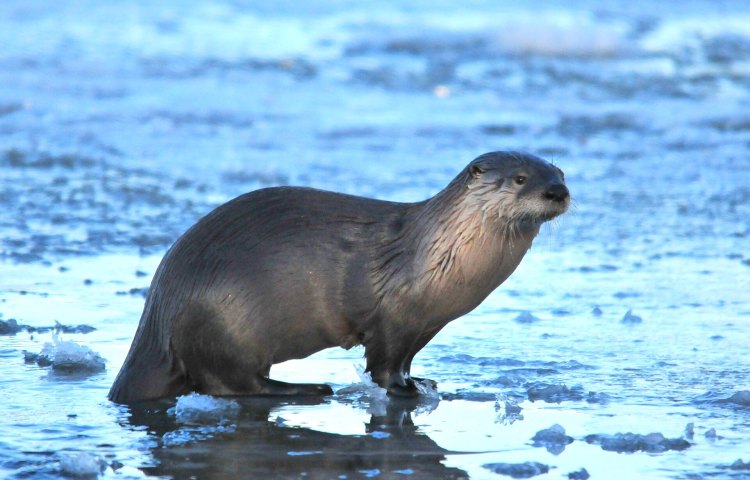
An otter-human hybrid may seem like a very unlikely pairing, but otters are actually very intelligent animals. They have been known to create tools in a human-like manner and have an advanced social hierarchy within their otter community. In American culture, otters are thought of as playful and friendly creatures. They hold each other’s hands, they swim upside down and are generally cute and cuddly. But, the Tlingit tribe see the playful nature of otters as a way to draw in victims.
The Kushtaka’s attack begins with an imitation of the cries of women and children, luring their victims down to the water much like the Sirens in Greek mythology. When the Kushtaka successfully get someone down to the river, they spiritually attack the person, turning them into a Kushtaka themselves by stealing their human spirit. This, the Tlingit believe, is the reason for the otters’ intelligence: all otters are actually half human. In Tlingit culture, when a person loses their spirit, they cannot move on to the afterlife. The only way to get their spirit back is by sending the tribe’s spiritual leader, the Shaman, to retrieve the spirit.
Most stories that recount the horrors of a Kushtaka attack have been passed down through Tlingit oral tradition. However, in 1900, a gold prospector Harry D. Colp was exploring an area known as the “Bay of Death” by the Tlingit tribe, when he had what he identified as a first-hand Kushtaka experience. He recounted the scare in a journal entry, which was discovered by his daughter and published in The Strangest Story Ever Told. He describes his experience with Kushtaka in the last few paragraphs of his journal entry.
Right there, fellows, I got the scare of my life. I hope to God I never see or go through the likes of it again. Swarming up the ridge toward me from the lake were the most hideous creatures. I couldn’t call them anything but devils, as they were neither men nor monkeys-yet looked like both. They were entirely sexless, their bodies covered with long coarse hair, except where the scabs and running sores had replaced it. Each one seemed to be reaching out for me and striving to be the first to get me. The air was full of their cries and the stench from their sores and bodies made me faint.
I forgot my broken gun and tried to use it on the first ones, and then I threw it at them and turned and ran. God, how I did run! I could feel their hot breath on my back. Their long claw-like fingers scraped my back. The smell from their steaming, stinking bodies was making me sick; while the noises they made, yelling, screaming and breathing, drove me mad.
The Kushtaka have been likened to Bigfoot, and some believe that they are related monsters. And while the Kushtaka are primarily seen as bad creatures, there are the paradoxical stories of Kushtaka helping out someone who is lost in the frozen wilderness. But for the most part, the Kushtaka remain a mysterious creature still feared by the Tlingit tribe. Never seen, never photographed, but always on the prowl for their next victim.