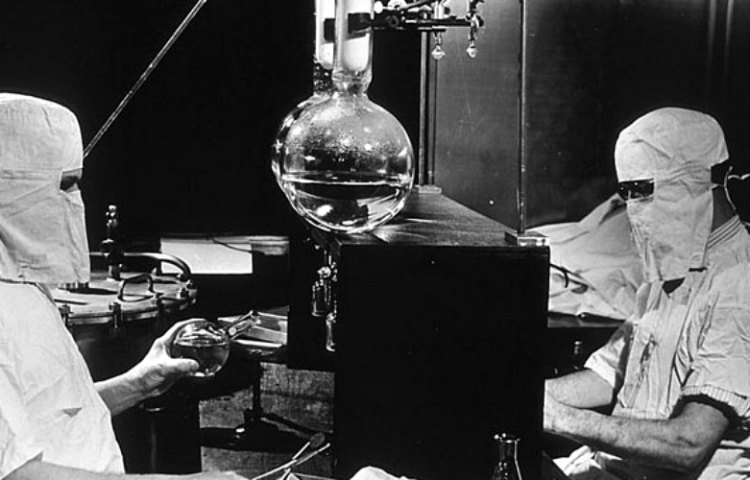
A top secret poison laboratory in the Soviet Union used exclusively to develop new ways of eliminating enemies and subversives? No, it’s not the plot to an axed Cold War-era James Bond screenplay. Nor is it some new conspiracy theory. As far-fetched as it seems, for decades the Soviet Union actually created and maintained a secret lab, known as the Kamera, or The Chamber, which led a sinister program to devised new methods of poisoning people.
Throughout Soviet history, members of the state security service, or KGB, often assassinated, kidnapped and murdered people who spoke out against the regime, both inside and outside of the country’s borders. They became infamous for these practices, and as time went by, they looked to mature their techniques so they could silence their opponents without any obvious fingers pointing to them. That’s where the Kamera came in. In 1921, Soviet officials decided to invest in a top secret program to expand their capabilities and officially began calling it the Kamera during Stalin’s reign.
The incredibly secret Kamera‘s main purpose was to ultimately create a poison that was odorless, tasteless and undetectable during an autopsy. They also looked to develop fast-acting and slow-acting poisons that also left no trace, experimenting with powders, liquids, injections and drinks and used things like mustard gas, ricin, digitoxin, curare and others.
The Kamera successfully devised new and bizarre ways of administering the poisons. For instance, assassins used Kamera technology to kill two officials with a vapor gun full of poison which made it look like the victims died of a heart attack. In fact, no one knew these people had been assassinated until a former KGB spy defected and confessed to the murders. Reports from the CIA mention a battery-powered gas pistol that could shoot liquid up to 20 meters away. Kamera agents tested these products on political prisoners from the Gulags across Russia. If somehow the people survived the tested poisons, they were then shot.
So, what became of the Kamera? It seems to depend on who you talk to. According to a declassified CIA document dating to 1964, the Soviets announced they disbanded the Kamera in 1953, but the U.S. believed it continued to function in some form. Although the Soviet Union fell 25 years ago, some point to recent poisonings of former agents and government officials, believing some KGB-like force is still at work using techniques from the Kamera. In his 2005 Wall Street Journal article, Boris Volodarsky, a former KGB spy, points out Kamera-like similarities between the substance used to poison Ukrainian presidential candidate Viktor Yushchenko in 2004 to the products created in the top secret laboratory. Conspiracy theory? Perhaps. Terrifying? Definitely.