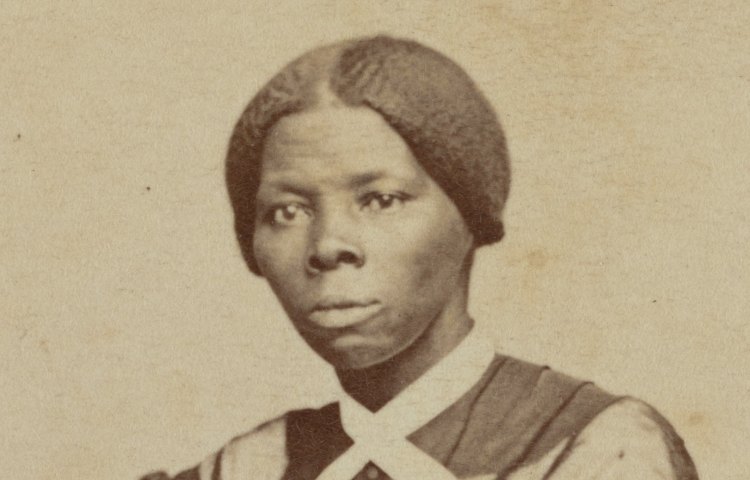
For the last few months, an organization called Women on 20s has been waging a political battle, rallying to get the government to put a woman’s face on paper currency—something that’s been sorely lacking for decades. In May, the group presented their final nominee to the White House: Harriet Tubman, former slave, nurse, suffragette and military spy.
Despite all these accolades, Tubman is actually best known for her work as an abolitionist. She was called the “Moses” of her time for guiding Southern slaves to freedom in the North. Over the course of her incredible life, this woman risked her safety 19 times to free hundreds of slaves through the secret tunnels of the Underground Railroad. She was a force to be reckoned with—not least because she proclaimed she had visions from God guiding her on the quest to free the oppressed. What few know about Harriet Tubman is that these visions may have resulted from a serious head injury she sustained as a child.
When Tubman was just 12-years-old and living in Maryland under the ownership of her slave master, she defied orders to restrain another slave for punishment. This almost cost Tubman her life: to punish the young girl, the foul-tempered slave master flung a two-pound metal weight at Tubman, striking her in the head and fracturing her skull.
Afterwards, Tubman began to experience crushing headaches, and became epileptic as well as narcoleptic. She lived with the symptoms of these disorders for the rest of her life, regularly falling into deep and sudden sleeps that lasted up to an hour at a time. Despite these physical challenges, when she was 29, the young woman resolved to escape slavery. But soon after her daring escape she did the unthinkable and returned to the South to free other slaves, secretly transporting them at night across several states to freedom. She claimed she was driven by messages from God. These directives, Tubman said, came to her during her narcoleptic dreams.
Earl Conrad, a famous biographer who wrote about Tubman’s life, described her visions this way (pg. 140):
One of the results of the sickness was that she developed a very extensive dream life. These dreams she would relate to the people about her, and she began to present them as visions, and she gave vent to expressions of foreboding, omens, warnings, and signs of this sort.
Indeed, narcolepsy is commonly associated with hallucinations and dreams. In fact, Harvard Medical School says “Many people with narcolepsy have very vivid and intense dreams and nightmares while sleeping. In fact, some dreams are so lifelike that it can be hard to tell them from reality.”
So Tubman’s empowering visions, which changed the course of history, may have arisen from the harsh blow she once received to the head. Ultimately though, Tubman single-handedly rescued over 300 slaves, including her siblings and parents, and that fact remains unchallenged regardless of the source of her dreams.
A prominent abolitionist at the time named Frederick Douglass once wrote to Tubman that her achievements hadn’t been sufficiently recognized: while he enjoyed public support and fame for his efforts, Tubman had only “the midnight sky and the silent stars” as witnesses to her bravery. But if her face appears on every $20 bill in America, that fact could change dramatically.