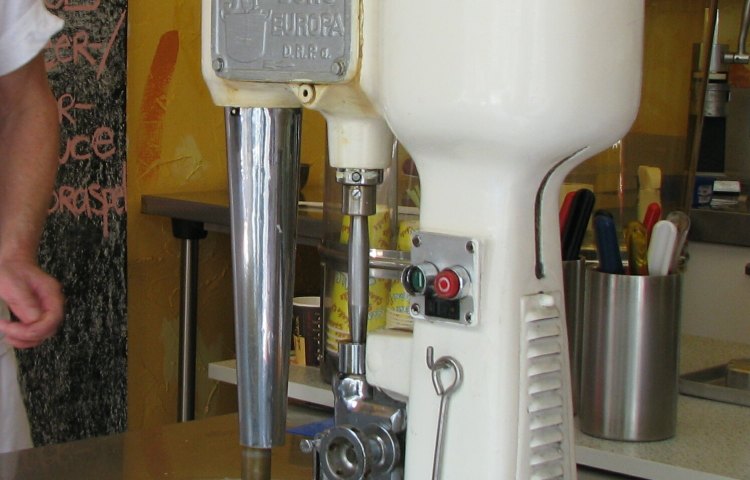
Americans have been enjoying ice cream for hundreds of years. Other parts of the world have been enjoying this summertime treat for even longer. Ice cream has a flavorful history that stretches back to the time of the Roman Empire, when ice was harvested from the mountains and flavored with fruit and juices.
But ice cream as we know it today didn’t start to take form until a little later. Most ice cream scholars agree that the Chinese were the first to develop an ice cream-like product. The emperors during the Tang dynasty (618-906 AD) ate chilled mixtures of goat’s milk, flour and camphor, a perfumed substance from a type of evergreen tree. They also used cow and buffalo milk depending on what was available.
The first recipe for dairy-based ice cream was found in the diary of Lady Anne Fanshawe, an English memoirist. The recipe was written around 1665 under the name icy cream. It called for cream, sugar, ice and flavoring. At the time, people flavored ice cream with things like orange blossom water, mace, or Ambergris, a waxy substance produced in the gut of whales. Here’s Lady Anne Fanshawe’s icy cream recipe:
French chefs were also known for experimenting with flavors including avocado, eggplant and lavender. “The flavors we think are unique today are not; they go way back,” said Laura Weiss, ice cream fanatic and author of the book, Ice Cream: A Global History. But until the 1800s, ice cream remained a rare treat that was only enjoyed by the elite because the ingredients were so expensive and hard to come by. Spices like cinnamon, nutmeg, vanilla and chocolate had to be shipped long distances from Far East or Central America. No one is sure when exactly ice cream made its way to America, but thank goodness it did. The first record of ice cream in America was in 1744, when the lady of Governor Blandon of Maryland served it as a dessert at a dinner party. It was probably made using the “pot freezer method.” where ingredients were set in a pot inside a larger pot filled with ice and salt, which cooled it down. The mixture had to be stirred every so often so it didn’t turn into a frozen block. The ice cream making process became a bit easier with the hand crank ice cream maker, which was invented in 1843 by a New England housewife named Nancy Johnson. The hand crank worked by placing a tin full of the liquid ice cream mixture into a wooden crate that was full of ice and salt. A paddle was inserted into the tin and churned with a crank. It would take about a half an hour to make ice cream using the hand crank. The end result was a smooth, tasty treat. The images of the hand crank below are taken from the Museum of Natural History Ice cream event.
In the 1800s sugar was shipped to grocery stores and sold in big cones. Every house would have their own sugar nippers to nip off the sugar that was needed for a recipe and grind it up in the mortar and pestle.
Children eating ice cream at the 1904 World’s Fair:
.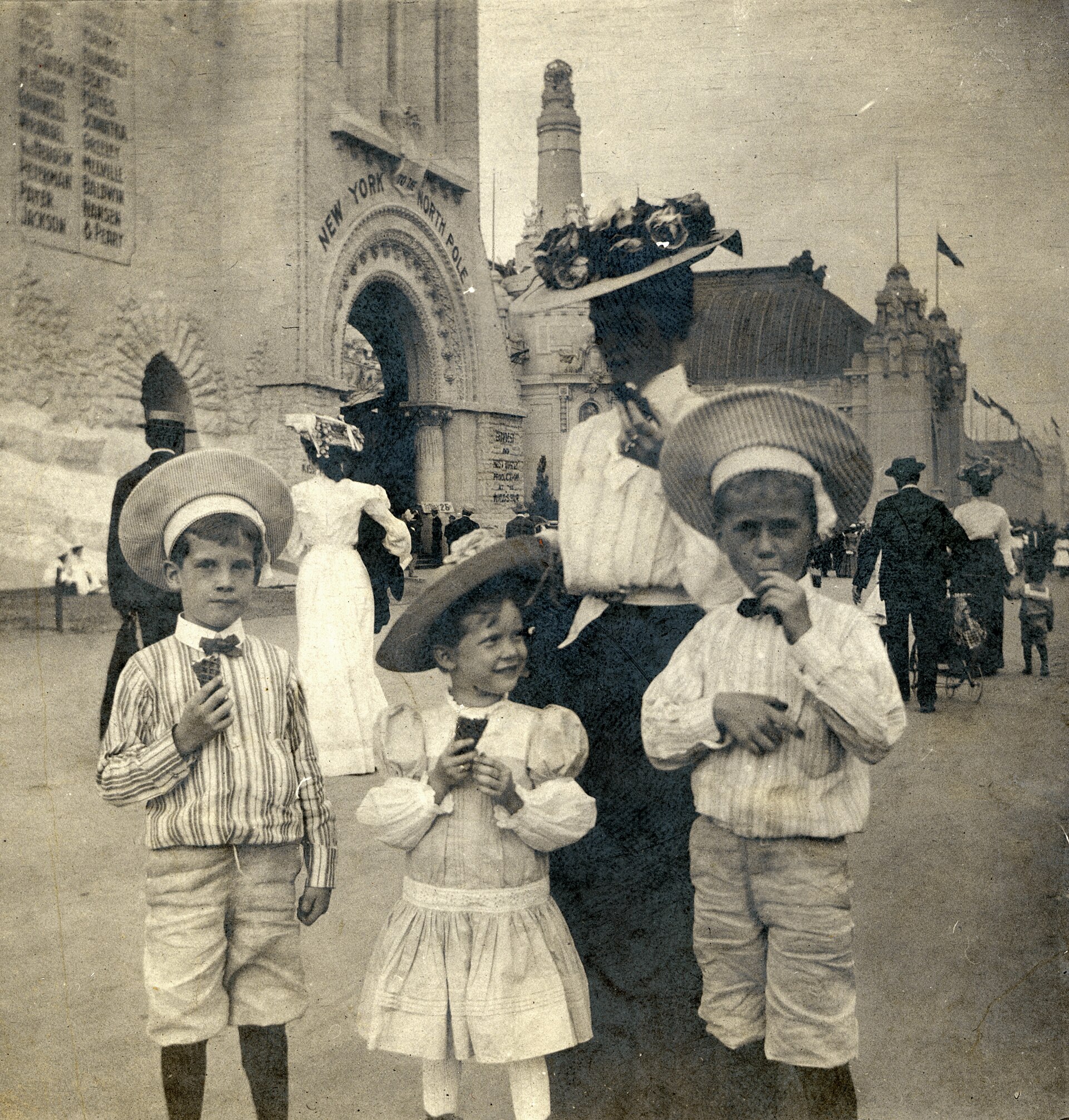
Louisiana Purchase Ice Cream Cone. Randolph Smith Lyon, Mildred Frances Lyon, Mrs. Montague Lyon (Frances Robnett Smith Lyon), Montague Lyon, Jr., eating ice cream cones at the 1904 World’s Fair. Snapshot photograph, 1904. Missouri History Museum Photographs and Prints Collections. Lyon Family Collection. N27536.
1917 photo of boys in ice cream cone factory:
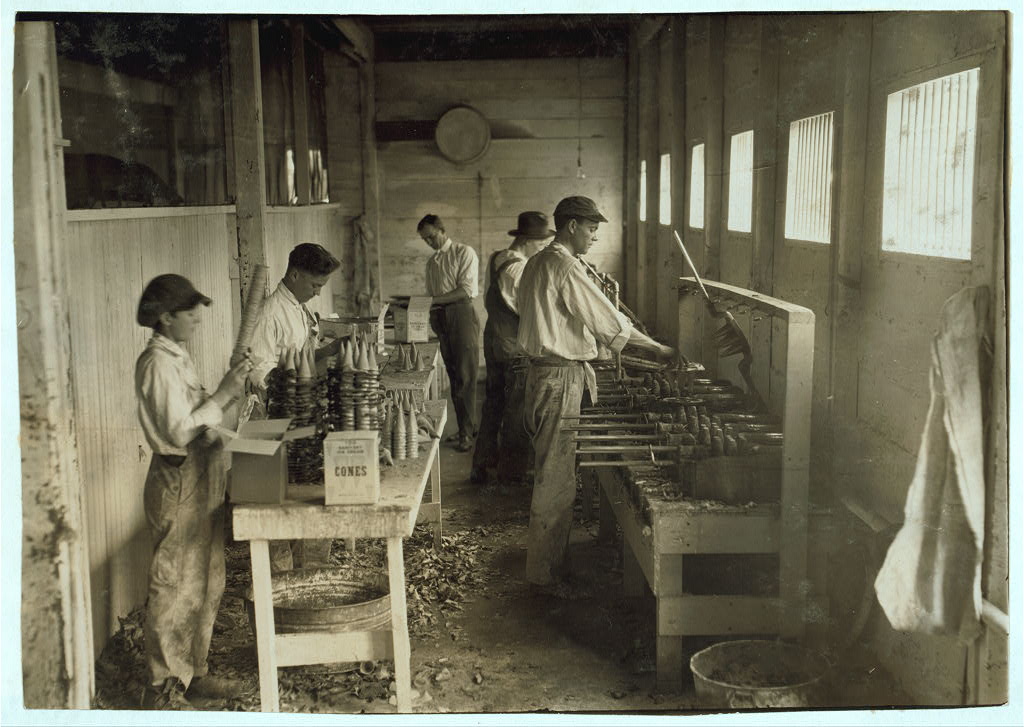 [Interior of workshop of Sanitary Ice Cream Cone Co. See 4830. Boys packing cones are John Myers, 14 years old and a boy 12 years old who is working steady now. Boss said: “He said he wasn’t going to school so I took him.” See 4830.] Location: [Oklahoma City, Oklahoma] / [Lewis W. Hine]
If you’d like to try your hand at making your own batch of ice cream from scratch, you can follow any of the recipes listed in this article. Have fun and enjoy! From Richard Briggs’ 1792 The New Art of Cookery, According to the Present Practice:
Take a dozen ripe apricots, pare them very thin and stone them, scald and put them into a mortar, and beat them fine; put to them six ounces of double refined sugar, a pint of scalding cream, and rub it through a sieve with the back of a spoon; then put it into a tine with a close cover, and set it in a tub of ice broken small, with four handsful of salt mixt among the ice; when you see your cream get thick round the edges of your tin, stir it well, and put it in again till it becomes quite thick; when the cream is all froze up, take it out of the tin, and put it into the mould you intend to turn it out of: mind that you put a piece of paper on each end, between the lids and the ice cream, put on the top lid, and have another tub of ice ready, as before, put the mould in the middle, with the ice under and over it; let it stand four hours, and do not turn it out before you want it; then dip the mould into cold spring water, take off the lids and paper, and turn it into a plate. You may do any sort of fruit the same way.